


ZigWord: Calm Word Puzzle
4.939.00 Reviews
App Specs
- Version
- 1.5.0
- Updated On
- License
- Free
- Downloads
- 50,000+
- Developer
- Oakever Games
- Categories
- Word
- Platform
- Android
Screenshots
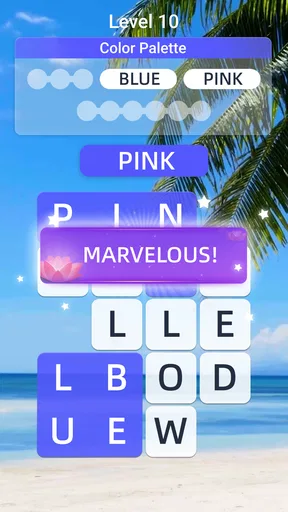
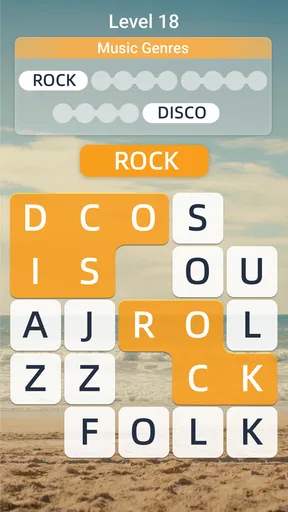
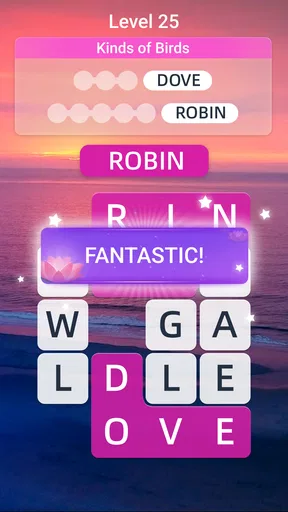
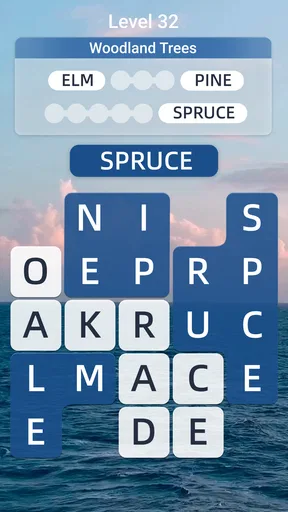
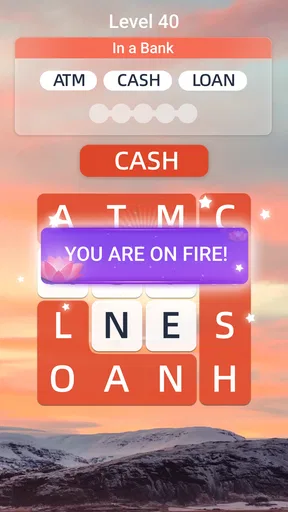
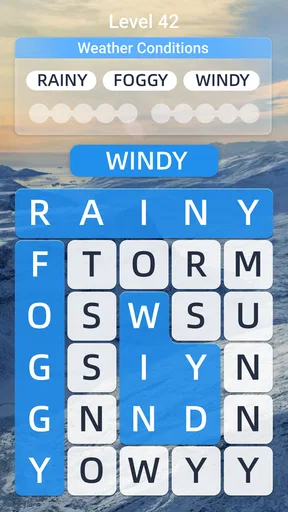
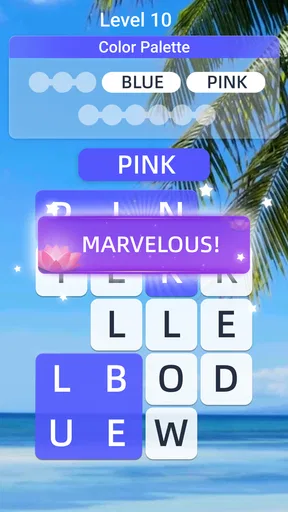
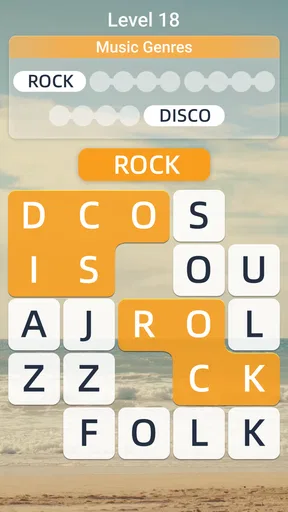
 Analysis by AppCompare
I approached ZigWord: Calm Word Puzzle as the sort of game I could open when I wanted a quiet break rather than a loud, competitive challenge. It is a free word game from Oakever Games, built around finding hidden words, and that simple idea gives it an immediately approachable feel. After spending time with it, I think its strongest appeal is not complexity but mood: it turns a few spare minutes into a gentle search for patterns.
The game currently sits at version 1.5.0, and its store presence suggests a product that is still being refined rather than a huge, feature-packed word platform. That distinction matters. If you want a deep vocabulary trainer, a social leaderboard, or a crossword replacement, you may find it too restrained. If you want a low-pressure puzzle to play offline and put down easily, its focused design makes much more sense.
How the current version feels to play
The central activity is straightforward: scan the puzzle, spot concealed words, and work through the challenge at your own pace. I like this format because it avoids the pressure found in timed word games. There is no need to type quickly or compete with another player. The satisfaction comes from noticing a word that was sitting in front of me all along.
That calm presentation also changes how I use it. I would not choose it for a long session when I want constant novelty or a dramatic sense of progression. Instead, it fits naturally into small pauses: while waiting for an appointment, during a short commute without reliable connectivity, or in the evening when I want something more engaging than scrolling but less demanding than a strategy game.
The offline angle is particularly useful. A word puzzle that works without a connection can become a dependable travel companion, especially when mobile service is inconsistent. It also makes the game suitable for moments when I want to keep distractions down. I can focus on the board rather than notifications, messages, or a live opponent.
Still, “calm” should not be mistaken for “effortless.” Hidden-word puzzles can become surprisingly absorbing once I have found the obvious answers. The difficulty comes from changing my visual approach: scanning horizontally, vertically, and diagonally, then reconsidering clusters of letters that initially look meaningless. That makes the game accessible at the start while leaving room for a little mental persistence.
A good fit for short, repeatable sessions
One of the best ways to use ZigWord is as a deliberate five-minute reset. I might open it after finishing a task, solve part of a puzzle, and stop before the activity turns into another endless feed. Because the basic interaction is easy to understand, there is little setup cost. I do not need to remember a complicated campaign or rebuild a strategy after a break.
Worth Reading Before You Choose

EA SPORTS FC Mobile 26 Is a Bigger Football Game, but It Takes Time

Flipboard Shows What News Apps Must Do Beyond the Feed

Switching to Android Auto Means Rethinking Your Driving Routine

Google Calendar Makes a Crowded Week Easier to Manage

Ludo King Makes the Most of the Minutes Between Plans

Baby Panda World Brings Quick Play to Modern Phones, but Its Game Library Feels Busy
For older players or anyone who prefers familiar word activities, the format is inviting. It rewards observation and vocabulary without requiring rapid reflexes. It can also work for casual family play, although people who enjoy comparing scores or racing against one another may prefer a more competitive alternative.
Another useful habit is to treat each puzzle as a visual warm-up rather than a test of intelligence. When I get stuck, I stop searching for complete words and instead look for common beginnings or endings. A group of letters that resembles a familiar suffix can reveal the direction of the answer. This small change in method is more effective than repeatedly staring at the same area.
What version 1.5.0 tells me about the product
The current version is important because it frames the game as an actively presented experience rather than an abandoned experiment. Version 1.5.0 gives existing players a clear reference point when checking compatibility or deciding whether to return. It also suggests a stage of development where the basic identity is already established: a quiet hidden-word game that favors accessibility over feature overload.
I would be careful, however, not to read more into the version number than it can support. A version label alone does not prove a major redesign, a new puzzle system, or a particular improvement. What I can judge is the current direction: the game remains centered on its core word-search loop, and that focus is part of its appeal.
For someone installing it today, the practical result is reassuringly simple. The minimum requirement is Android 8.0, so it is not limited to only recent phones. The age classification is Everyone, which matches the nonviolent, vocabulary-based nature of the experience and makes it easier to consider for a broad household audience.
The developer, Oakever Games, has positioned this release around a clear promise of relaxation rather than a long list of systems. That can be a strength when an app knows what it wants to be. It also creates a higher burden for the puzzle quality itself: without elaborate modes to distract from weak boards, the word-finding experience has to carry the game.
What returning players may notice
For existing users, the biggest benefit of a focused update path is continuity. A player who already enjoys the quiet search does not have to relearn a completely different game concept. The current release remains recognizable, which is valuable for a title people may open as part of a daily wind-down routine.
At the same time, returning players should keep their expectations measured. This is not the kind of release I would choose if I needed a dramatic change every time I came back. Its value is cumulative: the familiar interaction remains available, and the game works best when I appreciate small, repeatable moments rather than chase a major new feature.
I also find that offline play changes how progress feels. Without the social pressure of a live service, completing a puzzle becomes a personal marker rather than something to broadcast. That is ideal for players who find leaderboards distracting. It is less appealing for anyone who needs external goals, shared events, or visible competition to stay motivated.
A practical tip for returning players is to vary the time of day and the way you search. In bright conditions, I can scan the whole arrangement quickly; when I am tired, I do better by isolating a few letters and following possible word paths. The game’s simplicity makes these personal techniques more important because the challenge comes from attention and recognition rather than elaborate controls.
Where the experience still has limits
The same simplicity that makes ZigWord approachable can also make it feel narrow. Players who want an expansive vocabulary curriculum, definitions for every answer, or a structured learning path should look toward a dedicated language app. This game is primarily about finding words, not explaining them or teaching grammar.
It is also not the right choice for people who need a strong competitive hook. I would recommend a timed word battle or a multiplayer puzzle to someone who enjoys pressure, rankings, and immediate feedback from other players. ZigWord’s slower pace is intentional, but that means it may feel underpowered to someone who measures enjoyment through speed and performance.
The free price lowers the barrier to trying it, though in-app purchases range from $0.39 to $99.99 per item. That is a wide span, so I would advise checking each purchase carefully before confirming anything. The game is easiest to recommend to people who are comfortable treating optional spending as optional and who do not expect every convenience to be included automatically.
Another limitation is that a hidden-word format can become repetitive if I play for too long in one sitting. The solution is not necessarily to abandon it, but to use it in the way it suits best: short sessions, occasional returns, and a willingness to stop after a satisfying puzzle instead of forcing a marathon.
Small techniques that make the puzzles easier
My first useful technique is to avoid searching in a single direction. I begin with the longest-looking sequences, then rotate my attention around the board. Words that are invisible during a left-to-right scan can become obvious when I inspect diagonals or read backward. This is a simple habit, but it prevents the common mistake of assuming every answer will reveal itself in the most familiar orientation.
Second, I use anchor letters. Unusual letters or distinctive combinations attract attention faster than common vowels. Once I spot a promising pair, I trace outward instead of scanning every letter equally. This reduces visual fatigue and makes a difficult board feel more manageable.
Third, I change my distance from the screen. Looking closely helps with short sequences, while briefly relaxing my focus can make a larger word pattern stand out. This is especially useful when the board begins to look like a wall of identical characters. The technique costs nothing and turns the screen itself into part of the solving method.
Finally, I do not treat a missed word as a failure. If I am playing to unwind, frustration defeats the purpose. I pause, reset my eyes, and return with a different route through the letters. That approach is one reason the game works better for me as a calm break than as a test I must conquer immediately.
Who should install it, and who should skip it
I would recommend ZigWord to casual word-game players, people who enjoy visual searches, and anyone looking for an offline activity that does not demand fast reactions. It is also a sensible choice for a shared device used by different age groups because its Everyone rating and uncomplicated premise make it easy to understand.
I would be more hesitant to recommend it to serious crossword fans who want clues, word meanings, and layered deduction. Crossword puzzles ask me to interpret language; this game asks me to recognize it inside a visual arrangement. Those are related skills, but they produce very different experiences.
Likewise, players who need a substantial long-term progression system may be happier with a larger word-game collection. ZigWord’s strength is its narrow purpose. I can open it quickly, solve, and leave. That is excellent design for a break, but it may not satisfy someone searching for a primary game to occupy hours every day.
The store shows an average rating of 4.9 from around 1.5 thousand ratings, with over 50 thousand installs. Those figures suggest that the relaxed concept is connecting with its intended audience, while the smaller overall footprint also tells me this is a focused title rather than a dominant mainstream word platform.
What I would watch as the game evolves
Future development should protect the game’s calm identity while giving regular players reasons to return. I would be interested in improvements that add variety without turning the experience into a noisy collection of menus, timers, or compulsory competition. New ways to approach the same hidden-word idea could extend its life more effectively than unrelated features.
I would also watch how the balance between free play and in-app purchases develops. The free entry point is useful, but players need to feel that the core experience remains comfortable without spending. Clear choices and restrained interruptions would suit the game’s relaxing purpose better than aggressive prompts.
Another area worth watching is accessibility in everyday use. Since the game depends on spotting letters, readability and visual comfort matter as much as puzzle design. Any future refinement that makes extended scanning easier would have a direct effect on the people most likely to use it for quiet, regular breaks.
Overall, I see ZigWord as a modest but well-defined word game. It does not try to replace every puzzle genre, and that is precisely why I can recommend it in the right situation. I would install it for offline downtime, a calm evening routine, or a quick mental reset. I would skip it when I wanted competition, detailed language lessons, or a deep campaign. Its best quality is the clarity of its purpose: open it, search carefully, and let a few peaceful minutes pass.
Pros
- Relaxing gameplay with no time limits or stressful countdowns.
- Simple controls make it easy to play with one hand.
- Short levels fit well into quick breaks or commutes.
- Clean visuals keep attention focused on the word puzzles.
- Gradual progression provides a satisfying sense of improvement.
Cons
- Some puzzles may feel too easy for experienced word-game players.
- Limited variety can make the experience repetitive over time.
- Hints may reduce the challenge when used too frequently.
- Progression may feel slow without consistent daily play.
- Requires strong English vocabulary to solve tougher levels.
FAQs for ZigWord: Calm Word Puzzle
What is ZigWord: Calm Word Puzzle, and how is it played?
ZigWord: Calm Word Puzzle is a relaxing word game built around finding and connecting letters to form words. Instead of focusing on fast reactions or competitive pressure, it encourages careful thinking through calm, minimalist puzzle sessions. Players typically progress by identifying the correct word paths, completing levels, and using vocabulary skills to solve increasingly challenging boards.
Is ZigWord: Calm Word Puzzle suitable for beginners and casual players?
Yes, the game is designed to be approachable for casual players, including people who do not usually play word games. Early puzzles generally introduce the core mechanics gradually, allowing you to understand how letters connect and how solutions are formed. As you advance, the challenges become more demanding, but the relaxed presentation makes the experience comfortable rather than overwhelming.
Can ZigWord: Calm Word Puzzle be played offline?
Many puzzle games can be enjoyed without a constant internet connection, and ZigWord is intended to provide a convenient, pick-up-and-play experience. However, certain features may depend on connectivity, such as advertisements, cloud synchronization, updates, analytics, or in-app purchases. It is best to open the game online once after installation and check which features remain available when your device is in offline mode.
Does ZigWord: Calm Word Puzzle contain advertisements or in-app purchases?
The availability of advertisements and optional purchases can vary according to the version, platform, region, and developer settings. Players should review the store listing before downloading to confirm whether the game includes ads, paid extras, hints, or an option to remove advertising. If you are giving the game to a child, checking device purchase restrictions is also recommended.
Is ZigWord: Calm Word Puzzle free to download, and what devices support it?
ZigWord: Calm Word Puzzle may be offered as a free download, although some content or convenience features can require optional payments. Compatibility depends on the current Android or iOS release and your device’s operating-system version. Before installing, check the official store page for the latest requirements, download size, privacy details, and whether your phone or tablet supports the game properly.


